The short answer
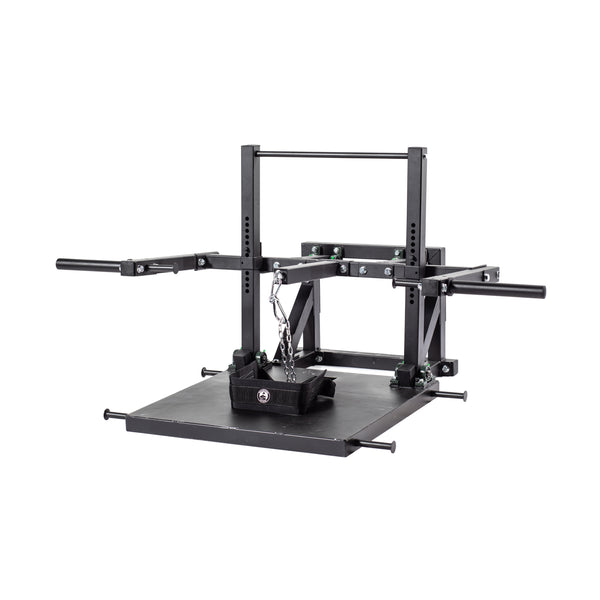
The three pieces of equipment worth owning to train your posterior chain at home are a Glute Ham Developer (GHD), a reverse back extension machine, a belt squat, and a glute ham slider. The GHD trains your glutes, hamstrings, and lower back together through their full range of motion. The reverse back extension specifically loads spinal extension and glute lockout — the muscles that make a deadlift feel easy at the top. The belt squat lets you hammer hamstrings and glutes with heavy load and zero spinal compression. The glute ham slider does some of the GHD's job in 1% of the floor space at 5% of the price for lifters who can't fit a full machine. If you can buy one piece, get a machine that combines GHD and reverse back extension. If you can buy two, add the belt squat.
Prefer video? Here is the Reverse Hammer — our 2-in-1 GHD and reverse back extension machine — walked through end-to-end:
What is the posterior chain (and why most home gyms train it wrong)
The posterior chain is every muscle on the back of your body that contributes to standing, hinging, sprinting, jumping, and pulling. The big four are the gluteus maximus, the hamstrings, the spinal erectors, and the calves. The supporting cast includes the gluteus medius, the adductor magnus, the multifidus, and the upper back. Together they are the engine of every athletic movement that matters.
The posterior chain is also the part of the body that almost every home gym underdevelops. The default home gym setup — rack, bench, barbell, plates — does a great job training the front of the body. Bench presses train your chest. Squats train your quads. Overhead presses train your shoulders. The back of the body gets trained, but only as a supporting cast in those lifts, never as the primary mover.
You can squat and deadlift heavy and still have weak hamstrings if you never bend your knees against load. You can bench three days a week and have a back that locks up every time you stand from a chair. The posterior chain rewards specific work — exercises that put the glutes, hamstrings, and lower back through their full range under tension. A barbell can do some of that. A few specific machines do all of it.
Why the gap matters
The lifters whose backs hurt at 50 are almost always the lifters who only trained the front of the body at 30. The same is true for hamstring strains, SI joint issues, and the slow loss of squat and deadlift strength most lifters experience in their forties. Direct posterior chain work is the closest thing to a longevity insurance policy in lifting.
Beyond longevity, posterior chain training drives most of the visible gains lifters chase. The look of a developed lower body comes from glutes and hamstrings, not quads. The athletic carryover — faster sprints, bigger vertical, harder pulls — comes from the back of the body, not the front. Skip it and your training plateaus in ways that feel mysterious until you look at where the work is missing.
This guide walks through the four machines that close the gap. What each one does. What the trade-offs are. Who they are for. And which Bells of Steel option fits each job.
The posterior chain machines at a glance
Here is how the three machines stack up. Use this as a decision matrix, then read the deep dive on whichever piece you are closest to buying.
| Machine | Primary muscles | Best for | Footprint | Price tier |
|---|---|---|---|---|
| Reverse Hammer (GHD + Reverse Back Extension) | Glutes, hamstrings, lower back | All-in-one posterior chain training | Medium | $$ |
| Belt Squat Machine | Glutes, hamstrings, quads (no spinal load) | Heavy posterior loading without back fatigue | Medium | $$ |
| Glute Ham Slider | Hamstrings, glutes, core | Small space, low budget, glute ham raise work | Tiny | $ |
1. The Reverse Hammer — GHD and reverse back extension in one machine

If you can only buy one posterior chain machine, this is the answer. The Reverse Hammer combines two of the most effective posterior chain tools into a single piece of equipment: a Glute Ham Developer (GHD) for hamstring and glute work, and a reverse back extension for spinal extension and glute lockout. Two machines that would normally cost over $2,000 separately, in one footprint.
What does a GHD machine actually do?
A Glute Ham Developer trains the hamstrings and glutes through their full functional range — both as knee flexors (curling the leg toward the butt) and as hip extensors (pulling the body upright from a folded position). No other piece of equipment trains both functions in one rep. The classic glute ham raise — body parallel to the floor, hamstrings pulling you up to vertical — is one of the highest-output hamstring exercises in lifting, period.
Beyond glute ham raises, a GHD lets you do back extensions, hyperextensions, weighted ab work, decline sit-ups, and Russian twists. It is the most versatile posterior chain piece in any gym, commercial or home.
How to do a glute ham raise
Set the footplate so your knees sit just behind the front pad of the GHD. Anchor your feet against the foot rollers. Start with your body fully upright, hips locked out. Lower your torso forward by extending at the hips first, then bending at the knees as your body becomes parallel to the floor. Reverse the movement by curling your hamstrings to pull your body back up to the start position. Keep your hips fully extended throughout — the moment your hips break, the exercise becomes a back extension instead of a glute ham raise.
Real glute ham raises are brutally hard the first time you try them. Most lifters cannot do a single full unassisted rep on day one. The standard progression is to start with assisted reps (push gently off the floor with hands, or use a band for assistance) and work toward unassisted singles, then doubles, then sets of 5 over months. By the time you can do unassisted sets of 8–12, your hamstrings will be unrecognizable from where they started.
What a reverse back extension adds
The reverse back extension flips the GHD: instead of your legs anchored and your torso swinging, your torso is anchored and your legs swing. The result is a spinal extension exercise where the load decompresses the lower back instead of compressing it — the opposite of what a deadlift or squat does to your spine. Lifters who do reverse back extensions consistently report dramatic improvements in lower back recovery, deadlift lockout strength, and overall posterior chain durability.
The reverse back extension is one of the rare exercises that actually feels good to do at the end of a heavy session. It traction-decompresses your lower back while simultaneously strengthening the muscles around it. It is also one of the best pre-deadlift warmup exercises in lifting — three light sets of 15 reverse back extensions before you load the bar will completely change how your hips and lower back feel for the rest of the session.
The full exercise list on the Reverse Hammer
- Glute ham raises — full ROM hamstring and glute work
- Reverse back extensions — spinal extension with traction, not compression
- Reverse hyperextensions — same movement, different name
- Banded reverse back extensions — add accommodating resistance via the band peg
- Cable-loaded reverse back extensions — for heavy progressive overload
- GHD sit-ups — weighted ab work most home gyms cannot do
- Russian twists — from the GHD position with a plate or kettlebell
- Weighted hyperextensions — standard back extension with a plate held to the chest
- Decline sit-ups — from the inverted GHD position
- L-sit holds — from the seated GHD position
Who the Reverse Hammer is for
- The lifter with a recurring lower back problem. Spinal extension training is one of the most evidence-backed interventions for chronic low back pain in lifting populations.
- Athletes who sprint, jump, or pull. Strong hamstrings and glute lockout translate directly into faster sprints and bigger deadlifts.
- The home gym owner who wants one machine to cover the back of the body. Two of the most expensive specialty pieces in commercial gyms, in one footprint.
- The aging lifter. Posterior chain weakness is the #1 cause of "I can't squat heavy anymore." This is the equipment that solves it.
- Powerlifters and strongmen. Direct posterior chain work is what separates lifters with big deadlift lockouts from lifters who stall at the floor.
The Bells of Steel pick: Reverse Hammer
The Reverse Hammer uses a vertically adjustable footplate and foot-roller carriage so the machine fits any height lifter. The crotch pad is removable for taller lifters who prefer a different anchor position. Side handles let you brace into pulls without rolling forward off the pads. Band and cable pegs let you load the reverse back extension portion with accommodating resistance — a feature most commercial GHDs do not include.
Diamond-plate step-up platforms make getting on and off the machine cleaner than a typical GHD, which matters more than you would think during a high-rep set when fatigue starts setting in.
The Reverse Hammer 2.0 walked through with feature deep-dives:
A full-body Reverse Hammer workout with strongman Maxime Boudreault and Sam Belliveau:
2. The Belt Squat — heavy hamstrings and glutes without the spinal load

The belt squat earns a slot in the posterior chain conversation because of one specific quality: it lets you load the glutes and hamstrings heavy without ever putting weight on your spine. That changes everything about how you can train the back of the body.
Take a wider stance and you bias the glutes and adductors. Sit deeper and you put the hamstrings under stretch they do not get from a back squat. Add bands at the top and you challenge glute lockout. All of this is possible because the load comes from a belt around your hips, not a bar across your shoulders. A back squat asks your spine to support every pound on the bar, which means your hamstrings stop being the limiting factor long before they should. The belt squat removes that ceiling.
Why a belt squat trains the posterior chain better than most lifters expect
A barbell back squat trains the posterior chain, but only as a supporting cast. Your spinal erectors are working to keep you upright. Your glutes are firing to extend the hips. Your hamstrings are stabilizing. None of them are the primary mover, and none of them get loaded to their actual capacity. The belt squat changes the leverage. With no bar on your back, your hamstrings and glutes can take a much higher percentage of the actual work.
Run sets of 20 belt squats with a slow eccentric and you will feel hamstrings the next morning that you have never felt from any other lift. Add a 3-second pause at the bottom and you have an unmatched glute and adductor builder. The belt squat is to the posterior chain what a leg press is to the quads — direct loading, no central nervous system tax.
Belt squat exercise variations for posterior chain emphasis
- Wide-stance belt squat — biases glutes and adductors
- Pause belt squat — 3-second pause at the bottom for raw glute strength
- Tempo belt squat — 4-second eccentric for hamstring stretch under load
- Banded belt squat — accommodating resistance for glute lockout
- Single-leg belt squat — step one foot off the platform for a brutal split squat alternative
- Belt squat good morning — standing in the belt, hinge instead of squatting for hamstring emphasis
- Belt squat marches — high-volume conditioning that fries the glutes
- Belt squat reverse lunge — one leg back at a time, brutal unilateral glute work
Who the belt squat is for
- The lifter who is tired of squats wrecking their back. All the leg loading, none of the spinal compression.
- High-volume hypertrophy lifters. 5x20 belt squats build glutes and hamstrings in a way nothing else does.
- Aging lifters. The most reliable way to keep loading the posterior chain heavy after your back starts saying no.
- Anyone training around an injury. Belt squats keep you in the gym while a back, shoulder, or knee issue heals.
The Bells of Steel pick: Belt Squat Machine
The Belt Squat Machine has a 700 lb weight capacity, commercial-grade Zerk bearings for smooth load travel, four band pegs for accommodating resistance, and 13 adjustable heights so the machine actually fits your specific stance. The base footprint is 51″ x 81″, but a vertical plate-peg storage option shrinks it to 51″ x 52.5″ when you are not lifting — a real consideration for garage gyms where every square foot is fighting for space.
For the full breakdown on belt squats, including how to use one and why every aging lifter should own one, read our dedicated Belt Squat Machine: Why Every Aging Lifter Needs One guide.
10 muscle-building exercises you can do on a belt squat:
3. The Glute Ham Slider — GHD work in a fraction of the space

If a full GHD does not fit your gym or your budget, the Glute Ham Slider is the closest thing in a fraction of the footprint. It is a heavy-duty wheeled platform that lets you do hamstring curls, ab rolls, glute bridges, and posterior chain finishers from anywhere — your gym floor, your living room, a hotel room. No machine, no anchor point required.
How a glute ham slider works
The simplest version: lie on your back, heels on the slider, and curl the slider toward your butt by contracting your hamstrings and lifting your hips. That is a hamstring curl plus a glute bridge in one rep, working both knee flexion and hip extension exactly the way a full glute ham raise does. The harder version: brace your knees on the slider and roll your body out into a plank, then pull yourself back — a hamstring-and-core exercise that lifters who cannot do real GHRs can use as a stepping stone.
The slider also doubles as an ab roller. Kneel down, grip the handles, roll out into extension, roll back. Most ab work in a home gym is done with a stability ball; a glute ham slider replaces that and gives you posterior chain exercises the ball cannot.
Glute Ham Slider exercise list
- Supine slider hamstring curl — the foundational glute and hamstring move
- Single-leg slider curl — same exercise, twice the difficulty per rep
- Slider glute bridge with hamstring curl — bridge up, curl in, extend back, lower
- Slider hamstring walkout — lie on back, push slider away with one heel at a time
- Slider ab rollout — from knees or feet, classic ab roller mechanic
- Slider plank reach — in plank, slide one hand forward and pull back
- Slider mountain climber — in plank, alternate driving knees forward on the slider
- Slider pike — from plank with feet on slider, pull hips up to a pike
- Slider knee tucks — from plank with feet on slider, tuck knees toward chest
- Cable-loaded slider GHR — with the eyelet variant, anchor a cable to the slider for loaded glute ham raises
Who the Glute Ham Slider is for
- The space-constrained lifter. Lives in a closet, fits in a backpack.
- The lifter on a budget. Real posterior chain work for under $75.
- Anyone who travels. Real hamstring and ab work in a hotel room or a friend's basement.
- Lifters who already own a GHD. Slider drills are the perfect 5-minute finisher when the GHD is in use or you do not want to set up a full station.
The Bells of Steel pick: Glute Ham Slider
The Glute Ham Slider comes in three options: the standard slider with eyelet ($71.99), a Mini version for travel ($52.99), and a no-eyelet variant ($44.97). All use heavy-duty wheels rated for full bodyweight loading. The eyelet version is the unsung hero — connect it to a plate-loaded cable tower and you have loaded glute ham raises that scale far beyond bodyweight.
18 exercises you can do with one slider:
What about hip thrusts? Meet the Soft Glute Bench
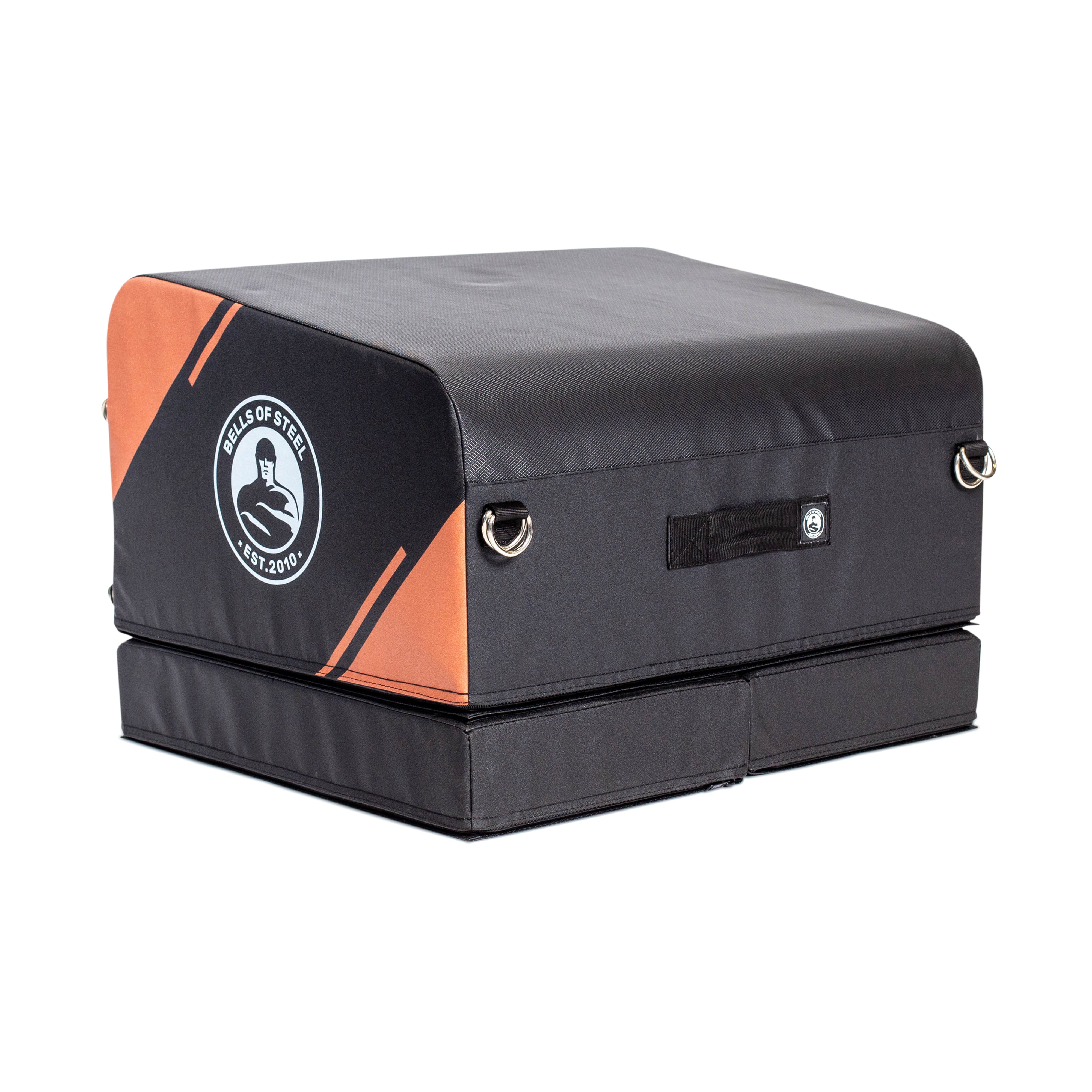
The hip thrust is one of the most effective glute-building exercises in the world. It is also one of the most awkward to set up at home — barbell across the hips, bench behind you, plates and pads stacked just right, and the whole thing balanced precariously while you try to get under the bar. The classic barbell hip thrust off a flat bench still works, but if you have ever done one, you know the setup is the worst part of the lift.
The Soft Glute Bench is the Bells of Steel solution. Instead of stacking a flat bench, mats, and a barbell pad to make hip thrusts work, you get a single purpose-built bench designed specifically for the lift. The sloped design positions your body at the right angle for full glute contraction at the top of every rep. The soft foam padding takes the bar dig out of the equation entirely. D-rings let you anchor resistance bands for accommodating-resistance hip thrusts, and the included strap pack (on the bundled variant) lets you load up without a barbell at all.
What makes the Soft Glute Bench different from a flat bench
Three things, all of which solve real problems with traditional barbell hip thrust setups:
- The sloped design. The bench rises gradually from 12″ at the lowest point to 19″ at the highest, which positions your upper back and shoulders correctly for hip thrusts no matter how tall or short you are. A flat bench is a compromise — the Soft Glute Bench is built for the exercise.
- The soft foam padding. Anyone who has done barbell hip thrusts off a flat bench knows the bar digs into your hips, the bench digs into your back, and you stop training the glutes long before your glutes are tired because the discomfort wins. The dense foam padding solves both at once.
- The 28″ x 23.75″ footprint. Wide enough for stability, small enough to live under a bench rack or against a wall. You do not lose floor space the way you do with a full hip thrust machine.
Soft Glute Bench key specs
- Footprint: 28″ x 23.75″
- Height range: 12″ (lowest) to 19″ (highest), with a gradual slope
- Design: Removable 4″ bottom blocks included for taller lifters
- Padding: Soft foam covering, firm enough for heavy loading and cushioned enough that the bar will not bruise you
- D-rings: Built in for resistance band anchoring
- Carry handle: For easy storage and repositioning
- Price: $262.99 USD (bench only) or $284.99 USD (with band and strap pack)
Exercises you can do on the Soft Glute Bench
- Barbell hip thrusts — the headline lift, finally without setup pain
- Banded hip thrusts — using the D-rings for accommodating resistance
- Strap-loaded hip thrusts — with the band and strap pack, no barbell required
- B-stance hip thrusts — one foot back for unilateral glute emphasis
- Single-leg hip thrusts — advanced glute hypertrophy
- Glute bridges — bodyweight or loaded
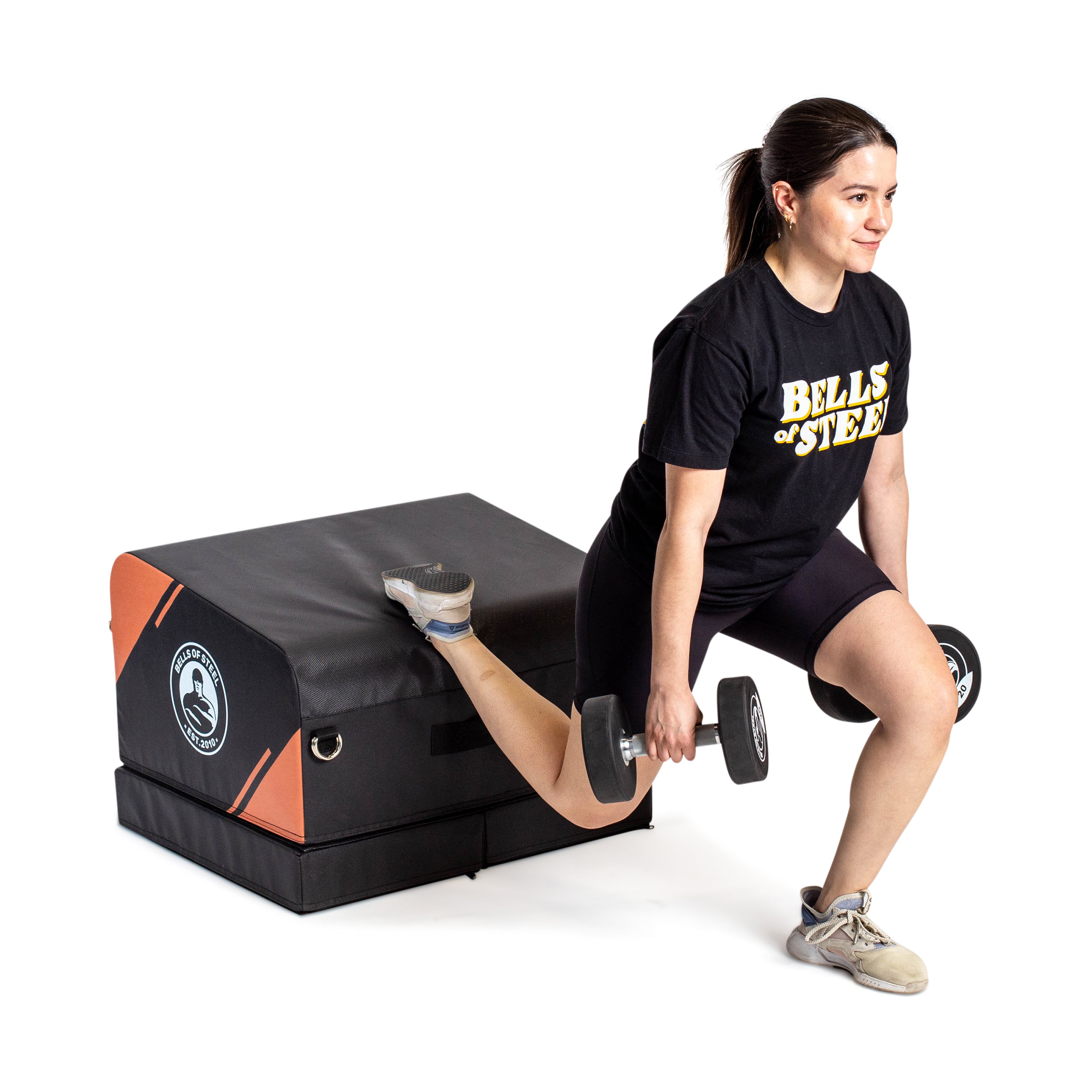
- Bulgarian split squats — using the bench as the rear-foot support
- Step-ups — the elevated profile makes it ideal for step-up variations
- Decline push-ups — feet elevated on the bench
- Incline push-ups — hands on the bench
A 20-minute glute workout with Bells of Steel USA's Kat — great programming reference for the Soft Glute Bench:
Who the Soft Glute Bench is for
- Anyone who hip thrusts. The flat-bench-and-barbell-pad setup is a compromise. The Soft Glute Bench is the actual answer.
- Lifters with limited floor space. A full hip thrust machine takes 25+ sq ft. The Soft Glute Bench takes about 5 sq ft and stores against a wall.
- Beginners learning the hip thrust pattern. The fixed bench position takes the setup variability out of the lift, which means you can focus on the movement instead of the staging.
- The home gym builder rounding out the posterior chain. Pairs cleanly with the Reverse Hammer, the Belt Squat, and the Glute Ham Slider to give you the full posterior chain coverage at home.
The real question for a home gym is not "do I need a hip thrust machine?" It is "does my posterior chain get trained well without one?" The Soft Glute Bench answers that question for the hip thrust specifically — less footprint than a dedicated machine, more comfort and stability than a flat-bench-and-barbell-pad setup, and a price tag that lets you add it to a home gym without rethinking the whole budget.
5 common posterior chain training mistakes
The lifters who underdevelop their posterior chain almost always make some combination of the same five mistakes. Most of them are habits inherited from how mainstream lifting culture talks about leg day.
1. Treating the deadlift as enough hamstring work
The deadlift trains the hamstring as a hip extensor — the muscle's straight-leg function. It does not train the hamstring as a knee flexor — the muscle's curling function. Both are essential. Lifters who only deadlift and never curl end up with imbalanced hamstrings that are great at one job and weak at the other. Curls (real ones, not the leg curl machine at the commercial gym) are not optional.
2. Skipping direct lower back work because "deadlifts cover it"
Deadlifts compress the spine. Reverse back extensions decompress it. The two are not the same exercise. Lifters who only deadlift and never do dedicated lower back work end up with backs that are great at one specific lift and fragile everywhere else. Direct lower back work — reverse back extensions, hyperextensions, even simple back extensions on a GHD — is what builds a back that holds up year after year.
3. Programming high-rep work only on the front of the body
Most lifters squat heavy in the 5–8 rep range and never do anything but heavy work on their leg day. The posterior chain responds especially well to higher-rep volume work — sets of 12, 15, 20. Skip the volume and you skip the hypertrophy. The lifters with developed glutes and hamstrings are the lifters who do high-rep posterior chain work, period.
4. Ignoring eccentric loading
The hamstring is one of the most eccentric-dominant muscles in the body. It is most prone to injury during the lowering phase of any movement that lengthens it under load. Training the eccentric specifically — slow lowers, Nordic curls, eccentric leg curls — is one of the best documented ways to prevent hamstring strains in athletic populations. Most home gyms skip this entirely.
5. Training the posterior chain only at the end of leg day
If your posterior chain is your weak point, train it first. The default home gym leg day is squat, then leg press, then a token set or two of hamstring work at the end when you have nothing left. Flip the order. Hamstring curls and reverse back extensions first, while you are fresh. Squats and presses second, after the back of the body is already stimulated. The lifters whose hamstrings catch up to their quads are the lifters who put posterior chain work first in their session.
Which posterior chain machine should you buy first?
If your back, hamstrings, or glutes are your weak points
Buy the Reverse Hammer first. One machine, both functions, immediate impact. The combination of GHD work and reverse back extension training fixes more posterior chain problems than any other single piece of equipment.
If you already squat heavy and your back is the limiter
Buy the Belt Squat first, the Reverse Hammer second. The belt squat keeps you training heavy without your spine paying the price. Add the Reverse Hammer once budget allows for the dedicated GHD and reverse back extension work.
If your space or budget is tight
Start with the Glute Ham Slider. Cost is under $75. It covers hamstring curls, glute bridges, ab work, and serves as a reasonable bridge until you can add a full machine. Most lifters who start here upgrade to the Reverse Hammer within 12–18 months.
If you are 40+ and building a forever gym
Buy the Reverse Hammer and the Belt Squat. Skip nothing. The two together let you train your posterior chain hard for the rest of your life without your back, knees, or shoulders making the call about when you stop.
Common questions about posterior chain machines
What does a GHD machine actually do?
A Glute Ham Developer trains the hamstrings and glutes through their full range of motion in two functions at once: knee flexion (curling the leg) and hip extension (straightening the body). It is the most complete piece of posterior chain equipment because no other tool trains both functions in one rep. Beyond glute ham raises, you can do back extensions, weighted decline sit-ups, Russian twists, and a long list of core and posterior chain exercises.
How is a reverse back extension different from a regular back extension?
On a regular back extension, your legs are anchored and your torso swings — you bend forward at the hips and use your lower back and glutes to come back upright. On a reverse back extension, your torso is anchored and your legs swing — you start with your legs hanging down and use your glutes and lower back to lift them parallel to the floor. The reverse version creates traction and decompression in the lower back instead of compression, which is why lifters with chronic back issues often find reverse back extensions much more tolerable.
Is a glute ham slider as good as a real GHD?
For about 70% of what a GHD does, yes — and for 1% of the floor space and 5% of the price. A slider does an excellent job at hamstring curls, glute bridges, and ab rolls. What it cannot do is loaded back extensions, weighted glute ham raises, or seated decline sit-ups — those need a full machine. Most lifters who own both report they use the slider as a finisher and the GHD as the main posterior chain station.
How heavy can you load a posterior chain machine?
The Reverse Hammer is bodyweight-driven, with bands or cables added for resistance — most lifters max out around bodyweight plus 50–100 lbs of band tension. The Belt Squat machine has a 700 lb weight capacity. The Glute Ham Slider is bodyweight, with the eyelet variant connecting to a cable for added resistance.
Do I really need a separate posterior chain machine if I deadlift?
Yes — and this is the single most-skipped truth in home gym lifting. Deadlifts are a great posterior chain exercise, but they only train the hamstring as a hip extensor, never as a knee flexor. They also load your spine heavily, which limits how often you can do them. Direct posterior chain work (GHRs, reverse back extensions, glute ham slider work) trains the muscles in ways the deadlift cannot, and it does so without the spinal cost. Lifters who deadlift twice a week and never do direct hamstring work end up with imbalanced legs and recurring hamstring strains.
Can I train the posterior chain without any machines?
Partially, yes. Romanian deadlifts, kettlebell swings, hip thrusts, single-leg deadlifts, glute bridges, and good mornings all train the posterior chain to some degree. What you cannot do without machines is full-ROM glute ham raises, loaded reverse back extensions, or heavy belt squats. The first 70% of posterior chain development is achievable with free weights. The last 30% — the part that separates a fine posterior chain from an exceptional one — requires machines.
How often should I train the posterior chain?
Two to three direct sessions per week is the sweet spot for most lifters. The posterior chain recovers faster than the quads or chest in part because it has a high proportion of slow-twitch fibers and high blood flow. Most lifters can run posterior chain work twice a week as primary training plus one additional finisher day without overreaching. Aging lifters and athletes coming off injuries often benefit from three direct sessions a week.
Are reverse back extensions safe for people with back pain?
For most chronic low-back-pain populations, reverse back extensions are not just safe — they are one of the most-recommended interventions. The exercise creates spinal traction (decompression) instead of compression, while strengthening the muscles around the spine. Lifters with active acute injuries or undiagnosed disc issues should clear the exercise with a physiotherapist or sports medicine doctor before loading it. Lifters with general "my back is tight after deadlifts" issues almost universally benefit.
The bottom line
Most home gyms train the front of the body well and the back of the body poorly. The three machines above fix that. The Reverse Hammer is the single best piece of equipment to fix it — a GHD and a reverse back extension in one machine. The Belt Squat is the close second, especially for lifters who want heavy posterior loading without spinal compression. The Glute Ham Slider is the affordable, space-saving entry point for lifters who cannot fit a full machine yet.
Whichever you start with, start with something. The lifters whose backs hurt at 50 are almost always the lifters who only trained the front of the body at 30. Do not be that lifter.
Build your posterior chain at Bells of Steel
Every machine in this guide is built and shipped from our Calgary HQ — designed for home gyms, priced to make sense, and built to outlast the lifter who buys it.