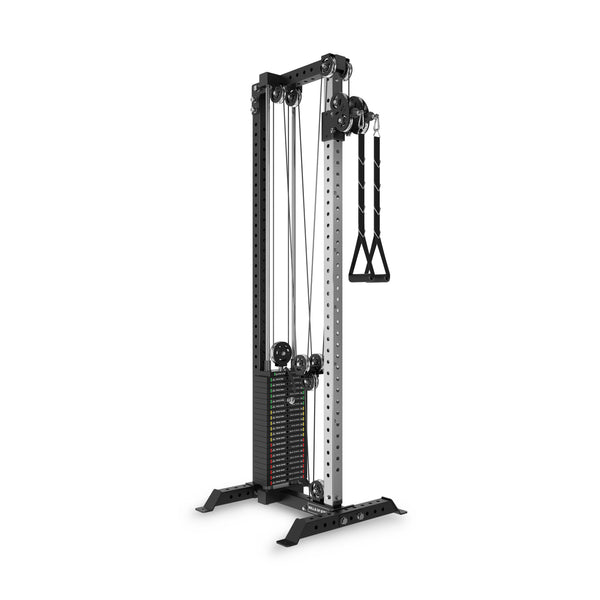
Building a home gym usually turns into a game of equipment Tetris. A rack here, a cable machine there, a pull-up bar squeezed wherever it fits. Before long, space disappears and the budget starts sweating. That is where an All-In-One Trainer steps in and makes a strong case for simplicity.
An All-In-One Trainer aims to cover the basics and then some. It blends a power rack, a cable system, and a pull-up station into one compact unit that is designed to live neatly in a corner. For anyone who wants maximum training options without filling every square inch of the room, this type of machine deserves attention.
Why One Piece of Equipment Might Be Enough
The biggest promise of an All-In-One Trainer is efficiency. Instead of bouncing between separate machines, everything lives in one place. Squats, presses, rows, pulldowns, flyes, and pull-ups all happen within the same footprint.
Corner placement plays a huge role here. Corners are often dead space in a home gym, but this trainer is built to claim that real estate. By anchoring the machine where two walls meet, it frees up the rest of the room for benches, plates, and open floor work.
It also reduces setup time. When the rack, cables, and pull-up bar are already in position, it becomes easier to train more often. Less setup usually means fewer excuses, and that alone can be a quiet win.
What Comes in the Box
The All-In-One Trainer comes in two main versions: a weight stack build and a plate loaded build. Both ship with the core pieces needed to start training right away.
Included components typically cover:
- Choice of weight stack or plate loaded system
- Aluminum pulleys for smooth cable travel
- A pair of Nylon Adjustable Length Single Handle Cable Attachment
- A lat pulldown bar and a straight bar for seated rows
- Lead chain and an adjustable foot plate
- All cables, bolts, and hardware required for assembly
Tools are not included, so a basic socket set is needed. Assembly takes some patience, but the result is a single machine that handles a wide range of exercises without constant reconfiguration.
Build Quality and Core Specs
This trainer uses 60 x 60 mm steel tubing, which matches the size found on many modern power racks. That matters because it opens the door to a wide range of compatible attachments.
The front uprights feature a chrome finish, and the trolley moves vertically using a nylon bushing system. It may not feel as slick as roller bearings, but it holds up well over time and keeps costs in check. The trade-off favors durability and value rather than chasing a luxury feel.
The overall construction leans sturdy and practical. It is built to handle daily use without feeling flimsy, which is exactly what a central gym piece should deliver.
Stability and Why Bolting Down Matters
Bolting the trainer to the floor is strongly recommended, especially for the plate loaded version. Without a heavy stack acting as an anchor, plate loaded systems can shift when used with heavier loads or steep pulling angles.
Movements like standing chest presses or high pulldowns create forward force that can tip an unbolted unit. Anchoring the frame solves that issue and makes training feel more secure.
The weight stack version offers better natural stability, but even then, bolting it down adds peace of mind. If the machine will serve as a primary squat station, anchoring is the smart move.
Understanding Pulley Ratios Without the Headache
Pulley ratios sound complicated, but they’re actually pretty straightforward.
The fly or pec station uses a 2:1 pulley ratio. In simple terms, the number on the stack looks heavier than what you actually feel. If the stack shows 100 pounds, the resistance at the handles is closer to 50 pounds. This setup makes the movement feel smoother and easier to control, which is ideal for flyes and pressing exercises where steady tension matters more than max weight.
Lat pulldowns and seated rows use a 1:1 ratio. If the stack shows 210 pounds, that is exactly what gets pulled. This makes strength tracking simple and predictable for big compound pulls.
Both versions use aluminum pulleys, which stay quieter and smoother than plastic options. Given the complex cable routing in this trainer, that choice makes a noticeable difference.
Weight Stack vs Plate Loaded: Which Should You Choose?
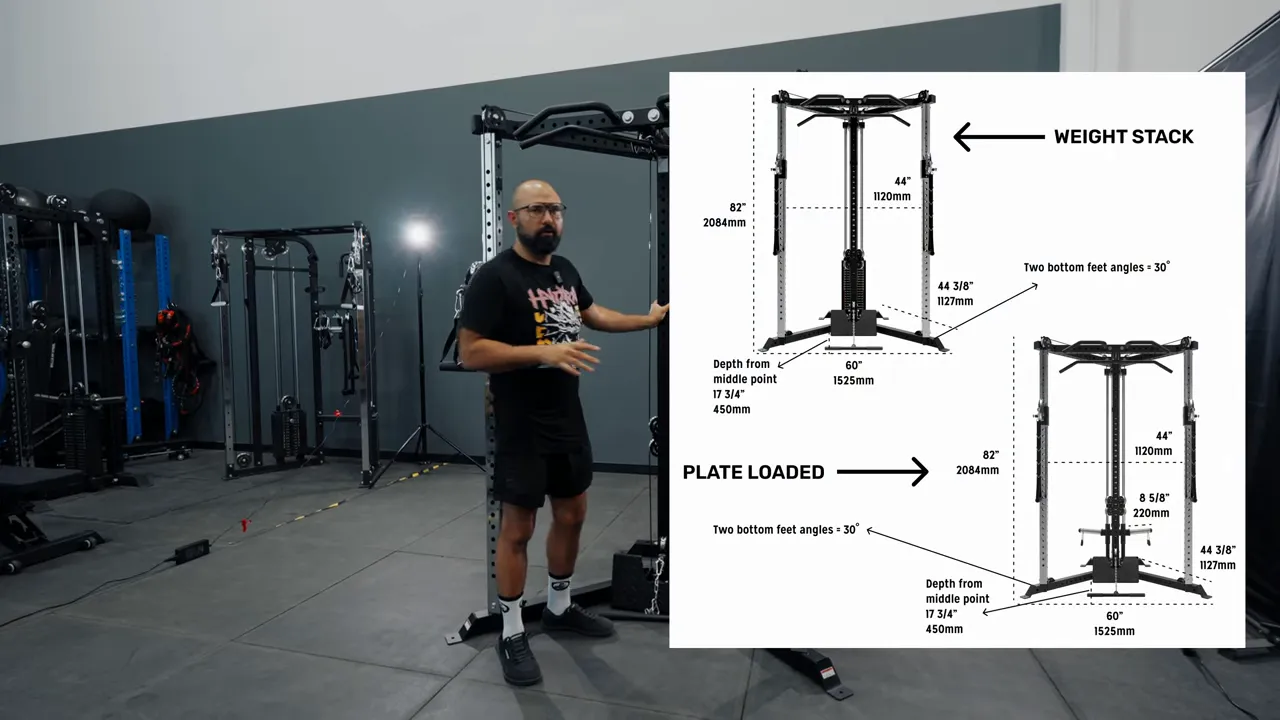
The decision often comes down to budget and long-term plans.
The plate loaded version costs less upfront and works well for lifters who already own plates. It also offers a clear upgrade path. A weight stack can be added later, which spreads out the cost and avoids locking into one setup from day one.
The weight stack version costs more initially but offers faster weight changes and improved stability. It shines for high-rep work, supersets, and shared gyms where adjusting plates constantly becomes annoying.
Both options train the same movements. The difference lies in convenience, feel, and how much room exists for future upgrades.
Footprint and Space Efficiency
Space is where this trainer really earns its keep. Designed to sit in a corner, it makes use of an area that often goes unused.
The plate loaded version needs a bit more room for loading and unloading plates. The weight stack version tucks closer to the wall since plates are already enclosed.
Either way, the footprint remains far smaller than owning a separate rack, cable tower, and pull-up station. For garages, basements, and spare rooms, that efficiency can be the deciding factor.
Attachment Compatibility and Expansion
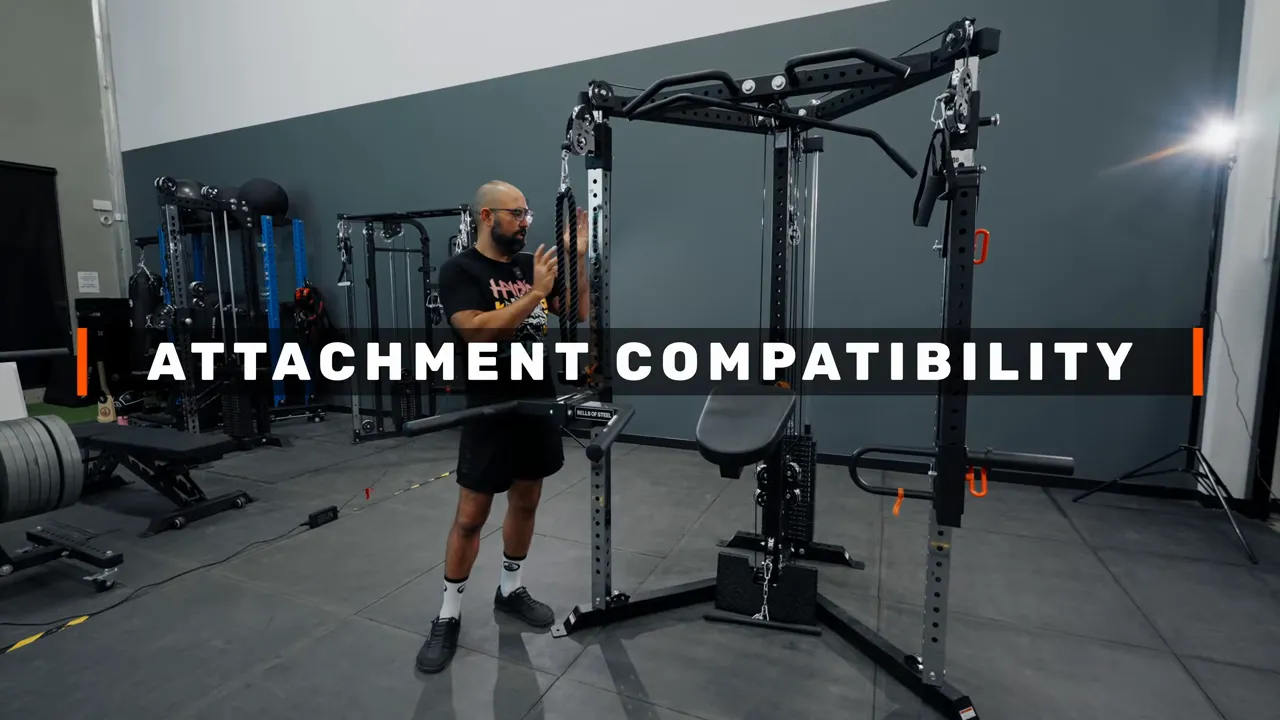
Because the frame uses 60 x 60 mm tubing, most rack attachments of the same size fit right in. That makes the trainer more of a foundation than a finished product.
Popular add-ons include:
- J-cups and Spotter Arms for barbell squats and presses
- Dip stations and lever arms
- Seal row pads and low pulley setups
- Standard cable handles using carabiners
Many users turn the trainer into both their rack and cable station. Adding J-cups and safeties allows barbell work, while the cables handle isolation and accessory movements. One machine starts pulling double duty.
Exercises You Can Do and a Few Limitations
The exercise menu is long. Cable flyes, rows, pulldowns, face pulls, dips, pull-ups, squats, and presses all fit comfortably into the setup.
One limitation shows up with incline benching. Rear tubing can prevent a bench from sliding far enough back for a safe liftoff. Flat benching works well, but incline presses may need a spotter or some creativity.
For most users, this is a small trade-off given how much the machine covers. Knowing the limitation upfront helps plan training around it.
What Changed in the 1.2 Revision
After thousands of units in circulation, several updates improved durability and ease of use.
Pulley housings are now straight instead of angled. This reduces shipping damage and improves weld consistency. Cable routing for the lap pulldown now runs inside the tubing, protecting the cable and simplifying assembly.
Cables now feature removable ball heads, which makes routing easier and future replacements far less frustrating. The pull-up bar is bolt-on rather than welded, improving packaging and transport safety.
A built-in adjustable foot plate for seated rows folds away neatly when not in use, keeping the area clean and functional.
Small Touches That Make a Difference
Laser-cut hole numbers appear every five positions to make setup quicker. Pop pins were relocated for easier access. Stickers clearly show pulley ratios in both pounds and kilos.
The rear foot was simplified to a straight bar to save space, and welded accessory hooks were removed to prevent shipping issues. Storage hooks are available separately for those who want them.
None of these changes scream flashy, but together they make the machine easier to live with day after day.
Who This Trainer Makes Sense For
This machine works best for people who want one centerpiece that does a lot of jobs.
It fits well for anyone with limited space who wants to use a corner effectively. It suits buyers who want to start modestly and upgrade later. It also appeals to those who enjoy adding attachments over time rather than replacing entire machines.
For a lifter who values versatility, organization, and a clean layout, this trainer checks many boxes.
Final Thoughts
An All-In-One Trainer is about practicality. It brings together a rack, a cable machine, and a pull-up station into one compact unit that grows with the user.
For home gyms where space matters and flexibility rules, this machine can serve as the backbone of training. Add the right attachments, bolt it down properly, and it can handle years of progress without demanding more floor space.
The real question is not what it can replace, but how far it can grow. With smart add-ons and consistent use, one machine can feel like an entire gym hiding in plain sight.