Gym flooring should be the easiest part of setting up a lifting space. You buy it, drag it in, lay it down, and get under the bar. Somewhere along the way, traditional rubber mats turned that simple process into a workout of its own.
That frustration is exactly what the Bells of Steel Rubber Flooring Gym Mat 24" x 24" were built to fix.
Oversized rubber flooring is bulky, awkward, pricey to ship, and a pain to reposition once it shows up at your door. The new 24 x 24 inch modular mats flip that whole experience on its head.
The Trouble With Oversized Rubber Mats
One of the popular sizes Bells of Steel has offered runs about 39 x 39 inches, or roughly 100 x 100 cm. Lifters like them, but there is one nagging issue: shipping.
Thanks to their footprint and weight, these bigger mats do not play nicely with standard parcel carriers. They usually ship on a pallet, which means freight is the only real option. That creates a chain of headaches:
- They are tough to box up properly
- Conveyor-based shipping networks cannot handle them
- Rolling them for transit can cause damage
- Freight costs climb fast
- Buyers sometimes expect normal delivery and get blindsided by freight requirements
Even when a product page clearly spells out freight-only shipping, that detail is easy to scroll past. A smaller, smarter format solves all of that at once.
What the New Modular Mats Are
Each piece or the Rubber Flooring 24" x 24" Gym Mat is a far more common flooring size, and the real-world difference is huge. Instead of wrestling with one giant slab, you work with tidy sections that pack, ship, carry, and position without the drama.
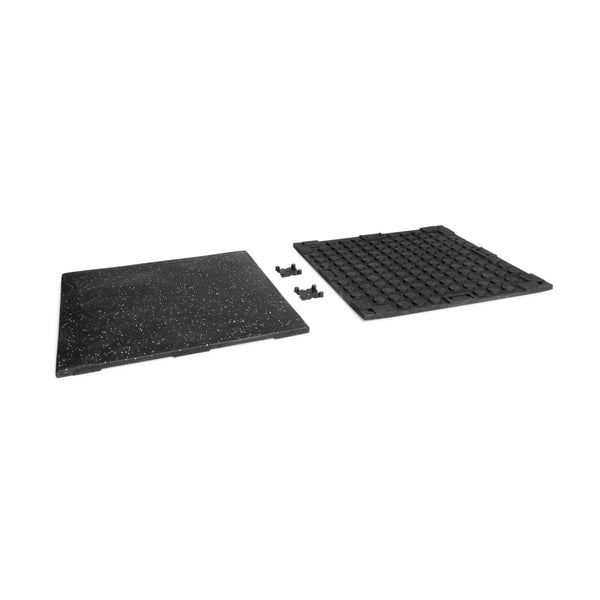
They come in packs of two and include:
- 2 rubber mats
- 2 plastic connector pieces
Grab as many packs as your space calls for, snap them together, and your layout is done.
How the Connector System Works
Flip a mat over and you will see grooves running along the underside. Those grooves pull double duty.
First, they help with drainage and airflow. Any moisture on the floor has somewhere to go instead of getting trapped under the rubber. Second, they lock in the plastic connectors that tie neighboring mats together. The connectors slide into the channels and keep the pieces aligned so your platform does not drift apart.
For a two-mat setup, placing the connectors near the middle works well. As the layout grows, add more connection points between mats to keep the whole surface locked in.
Easier to Live With, Not Just to Ship
Shipping is the obvious win, but daily handling is where modular flooring really earns its keep. Big rubber mats are heavy in a weirdly awkward way. They flop, they snag on doorways, and they turn simple setup into a two-person job.
Smaller mats pick up easy, fit through tight spaces, and land exactly where you want them. That convenience matters even more in garage gyms, basements, or any space where you are the one doing the lifting and the layout.
Expansion gets simpler too. Start with a small pad now, add more pieces later, and keep growing without scrapping what you already own.
Figuring Out How Many You Need
Because these mats come in smaller pieces, you can plan around your actual setup instead of forcing one oversized slab to fit.
For a slim deadlift platform: Four mats in a row give you enough room for you and the bar while keeping the footprint compact. Standing across the seams should feel solid.
For a squat rack or power rack: Sizing gets a little more specific here. Bells of Steel power racks run about 49 inches wide, and four 24 x 24 mats arranged in a square only reach 48 inches by 48 inches. That comes up just short for full rack coverage, so six mats is the smarter call. A practical layout looks like 3 mats in one row and 3 in the next.
Even though the mats sell in packs of two, plan by total coverage first, then round up to enough packs to get there.
Modular vs. the Older 39 x 39 Mats
The older large mats measure about 39 x 39 inches. Four new modular mats in a square stretch out to 48 x 48 inches, giving you a bigger platform while still being easier to ship and move. Bigger coverage, smaller hassle. Not a bad trade.
Rubber Smell and Material
These mats use low-odor consumer recycled rubber. The low-odor part is worth calling out, because the first question people ask about any rubber flooring is how bad it smells.
Every rubber product has some scent at first, so expecting zero odor is unrealistic. That said, these land on the friendlier side of the scale, especially compared with heavy-duty mats that turn a garage into a tire shop for a week.
Finish and Appearance
There is also a visual tweak worth noticing. The older mat sports a higher-gloss black top with a white underside. The new modular mats show:
- Black underside
- Matte black speckled top
A glossier finish tends to spotlight every footprint and dust mark. The matte speckled surface hides the daily grime between wipe-downs, so it stays looking fresh longer. Neither one is better, it just depends on how picky you are about visible marks.
Who These Mats Fit Best
The Rubber Flooring 24" x 24" Gym Mats make the most sense for a few types of lifters:
- Home gym owners who want flooring that ships without freight drama
- Garage gym setups that need durable rubber you can actually carry inside
- Anyone building in stages who plans to expand flooring later
- Lifters creating a deadlift area without a full raised platform
- Anyone who has hauled giant rubber mats once and sworn never again
That last group might be the biggest fan base of all.
Same Job, Way Less Hassle
Gym mats have a simple job: protect the floor, support solid lifts, and fit the space.
Flooring that is hard to ship, hard to move, and hard to install becomes part of the product whether anyone wants it to or not.
The Rubber Flooring 24" x 24" Gym Mats chip away at all of that friction. You get a manageable size, a connectable layout, lower-odor recycled rubber, and the freedom to build the exact footprint your gym needs.