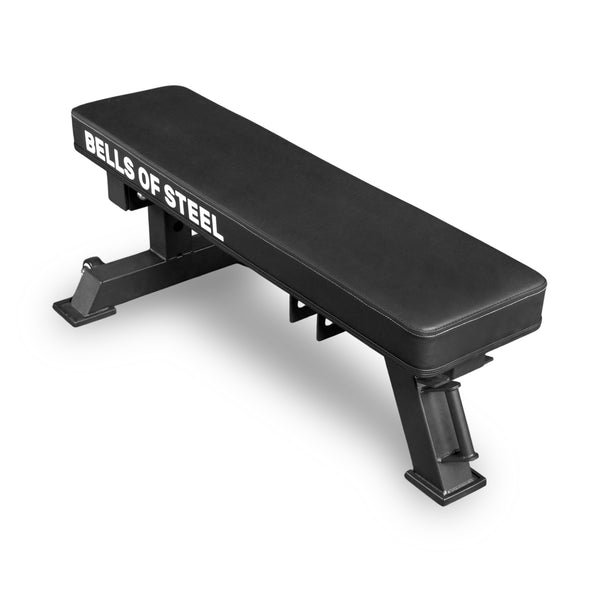
The flat bench is one of the most overlooked decisions in a serious gym build. Adjustable benches get a lot of attention because they seem like the smart play, one piece that covers everything. But if the bench press is a priority, a dedicated flat bench almost always wins on feel.
The Converter Bench was built around that idea, then pushed further.
This is a heavy-duty flat bench designed to fit into powerlifting setups, commercial gyms, and home gym builds without asking you to compromise on any of them.
What Problem Does This Bench Actually Solve
Most fixed bench stations are exactly that: fixed. They serve one purpose, occupy their own footprint, and do not play well with other equipment.
The Converter Bench could function as a standalone flat bench, integrate into a combo rack, work inside a power rack, drop into a commercial-style bench station, and still hit the dimensional requirements for IPF-style competition benching.
Getting bench height right is straightforward when a bench only lives in one environment. Keeping it right across Hydra uprights, Manticore uprights, 2-post setups, 4-post setups, and a combo rack all at once is a much harder problem to solve.
Who This Bench Is Built For
The Converter Bench targets two groups specifically: powerlifters and serious gym builders, both home and commercial.
That means the design priorities are heavy construction, thick gauge steel, dense padding, and a stable feel under load. It's built for people pressing hard, pressing often, and wanting equipment that does not move when they do not want it to.
How the Bench Is Built
The Converter Bench is one of the heavier benches in the lineup, and that is intentional. A heavier bench moves less and inspires more confidence under a loaded bar.
Practical features round out the build:
- Wheels and a handle for easier repositioning
- Rubber pads on the feet for grip and floor protection
- Removable front and rear feet for different configurations
The front foot uses a single-post design, which gives powerlifters more freedom to tuck their feet back without a wide support getting in the way. The post angles outward, so you still get solid stability without giving up that foot positioning flexibility.
The rear foot runs horizontally to create a stable base and includes alignment points for use with the combo rack and spotter deck system.
Since both feet are removable, the bench can be sold as the top frame and pad only (for fixed or integrated rack setups) or as a full standalone bench with legs included.
The Built-In Incline Option
Here is something that sets this bench apart from most dedicated flat benches: it converts to a makeshift incline.
Remove the front foot, reposition the bench against an integrated stopper, and you land at a 27.6-degree incline angle.
Upgrading the front bolts to mag pins makes that transition quick. The removable foot includes UHMW on the underside to reduce scuffing, and the setup has been tested on both rubber mats and concrete.
This is not trying to replace a fully adjustable bench. The idea is: if flat pressing is the main event but you still want occasional incline work, you do not need to buy a second bench.
Four Ways to Set It Up
Standalone flat bench: Use it with both feet attached and roll it wherever it needs to go. Simple, heavy-duty, competition-spec height.
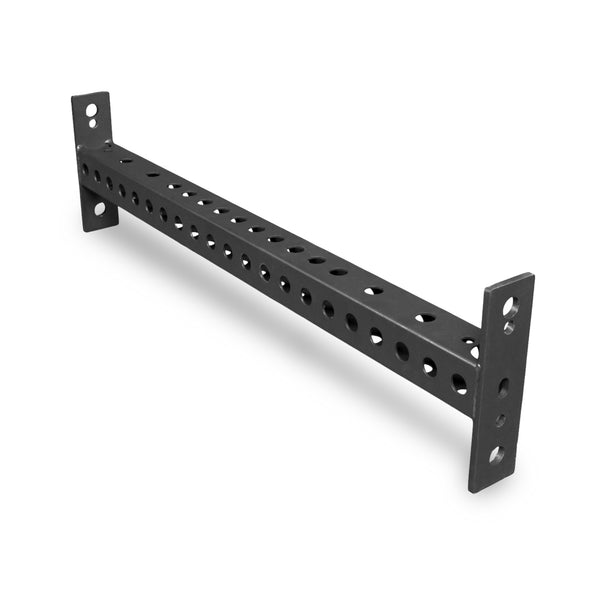
4-post floating station: Using 60-inch Hydra uprights and specialty 43-inch crossmembers with oversized brackets, the bench mounts with no lower posts in the way. This gives powerlifters a completely clear area for foot placement and a fully customizable pressing station.
Note: this setup requires 24-inch depth crossmembers specifically, since the Converter Bench brackets align to that depth.
2-post open bench station: A more classic commercial-gym look using 60-inch Hydra uprights, the specialty crossmember, short front foot stabilizers, and spotter arms.
The bench still hits IPF-style height requirements and works with Hydra attachments when it is not being used for pressing.
Power rack integration: Slide the bench into a Hydra or Manticore rack using the specialty crossmember to locate and center it. Mag pins secure the rear connection so the bench pulls out easily when it is time to squat.
The setup eliminates the eyeball-and-hope method of centering a bench under the bar and keeps the position consistent from session to session.
Hydra and Manticore Compatibility
The Converter Bench works across both ecosystems, with some hardware nuance worth knowing.
Hydra is especially well-suited to bench stations because of its 1-inch hole spacing, which makes it easier to dial in j-cup and safety height precisely. The specialty crossmember uses Manticore hole sizing to bridge the two systems, since the Converter Bench hardware follows the Manticore standard. Without that accommodation, pairing the bench correctly with Hydra uprights would not be possible.
Is the Converter Bench Right for Your Setup
This bench makes the most sense if any of these apply:
- Competition-style bench press is a training priority
- A full bench station setup is on the radar
- A centered, stable bench position inside a power rack matters
- Occasional incline work is needed without buying a second bench
- Space efficiency is a real consideration
If a basic adjustable bench covers everything needed, the Converter Bench is more specialized than necessary. But for anyone serious about the bench press, training in a powerlifting context, or building a more complete rack system, it fills a gap that most single-purpose benches leave open.