Before buying home gym equipment, you need to understand your real budget, your space limits, and your safety requirements. The best equipment isn’t the cheapest or the flashiest—it’s the gear that lets you train consistently without risking injury or financial regret.
Buy smart first. Upgrade later.
Why This Question Matters
A lot of home gyms don’t fail because people quit. They fail because people bought the wrong stuff upfront.
It usually looks like this:
- Overspending on gear that doesn’t fit the space
- Cutting corners on safety to save money
- Buying cheap equipment twice instead of solid equipment once
- Realizing too late that accessories add up fast
Thinking about budget and safety before you buy saves money, space, and frustration later.
Budget Basics: What You’re Really Paying For
The Real Cost of Home Gym Equipment
The sticker price is only part of the story.
You’re also paying for:
- Durability over years of use
- Safety features like proper steel thickness and welds
- Compatibility with future upgrades
- Equipment that won’t need replacing in a year
Cheap equipment isn’t cheap if it has to be replaced—or worse, if it puts you at risk.
Set a Budget That Matches Your Reality
Ask yourself:
- How often will I train?
- Is this a short-term experiment or a long-term habit?
- Am I building slowly or all at once?
A small, well-chosen setup beats an expensive mess every time.
Buy Fewer, Better Pieces
You don’t need everything on day one.
Start with:
- One main training tool (barbell and weights, rack or all-in-one trainer)
- Enough weight to progress
- One or two accessories that actually support your training
You can always add later. You can’t un-buy junk.
Safety First: Non-Negotiables in a Home Gym
Safeties Are Not Optional
If you’re lifting alone—and most home gym owners are—you need a way to fail safely.
That means:
- Spotter arms
- Safety pins
- Proper rack height adjustments
Skipping safeties to save money is one of the most common—and dangerous—mistakes.
Bells of Steel racks and safeties are built specifically for solo lifters. See the lineup here.
Stability Matters More Than Max Weight Ratings
A rack rated for 1,000 lbs doesn’t help if it wobbles every rep.
Look for:
- Thick steel uprights
- Solid welds
- A stable footprint or ability to bolt down
Feeling safe under the bar matters as much as actual numbers.
Flooring Is Part of Safety
Dropping weight onto bare concrete or thin mats is a recipe for damage—to your plates, floor, and joints.
Rubber flooring:
- Reduces impact
- Improves traction
- Protects your space
It’s not glamorous, but it’s smart. Bells of Steel gym flooring options live here.
Smart Equipment Choices That Balance Budget and Safety
Barbells and Plates
Your barbell is the one piece of equipment you’ll touch almost every session. This is not the place to go ultra-cheap.
A good bar should:
- Spin smoothly
- Handle repeated loading
- Feel consistent in your hands
Plates should be durable, accurate enough for your goals, and safe to load and unload.
Bells of Steel barbells and plates live here.
Power Racks, Half Racks, and Squat Stands
These cover squats, presses, benching, and often pull-ups. Compact racks or squat stands with safeties are more than enough for most lifters and don’t overwhelm smaller rooms.
What matters most is having safeties you trust. Explore Bells of Steel racks here.
All-in-One Trainers
If space is limited and you want maximum versatility, all-in-one trainers can be a strong value play.
They combine:
- Barbell training
- Cable exercises
- Pull-ups
- Rack attachments (seal row pad, Y-dip, etc)
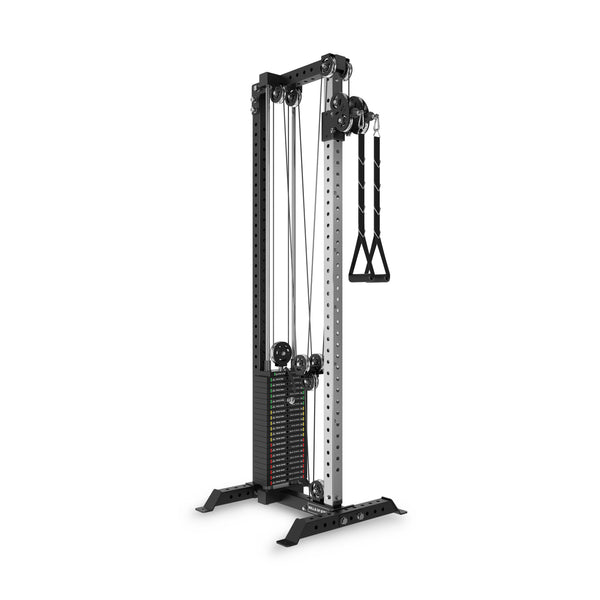
The upfront cost is often higher, but they can replace multiple machines and reduce clutter. Check out the All-in-One right here.
Adjustable Benches
Benches get used more than people expect—and abused more than they should.
Look for:
- Solid construction
- Stable base
- Reliable adjustment mechanisms
A shaky bench is a safety issue, not an inconvenience. A strong bench is the foundation of your home gym.
Common Budget and Safety Mistakes to Avoid
Buying Everything at Once
It’s tempting, but it often leads to regret. Start small. Learn what you actually use. Build from there.
Choosing Price Over Purpose
The cheapest option is rarely the best value if it limits training or needs replacing. And the most expensive option is often too much for those just getting started. Don’t buy based on brand name.
Ignoring Space Constraints
Equipment that barely fits creates unsafe setups and rushed movement. Measure first. Always.
Skipping Professional-Grade Basics
You don’t need commercial machines—but you do need equipment designed for real loading and repeated use.
Budget-Friendly Ways to Build Safely Over Time
If you’re trying to keep costs down:
- Start with a barbell, plates, and a rack or stands
- Add a bench next
- Expand with accessories like bands or kettlebells
- Upgrade storage and flooring as you go
Progressive gyms are built the same way as strength: gradually.
Home Gym Budget & Safety FAQs
Is Cheap Home Gym Equipment Unsafe?
Not always—but some cheap equipment often cuts corners on materials, stability, or tolerances. That’s where problems start. Read reviews and do your research before you commit.
Do I Need to Bolt My Rack Down?
Not always. Some racks are stable without bolting, but heavier or taller setups benefit from it—especially for solo lifting. We recommend most racks and all-in-one trainers get bolted down. If that’s not an option, look at a flat foot (bolt-free) rack.
What Should I Never Skip to Save Money?
Safeties, a solid barbell, and stable flooring. Those protect you and your space.
Is Used Equipment a Good Option?
It can be—if it’s structurally sound. Avoid heavily rusted bars, bent frames, or cracked welds.
How Much Should a Beginner Budget?
Enough to buy safe, versatile basics. You don’t need top-tier everything—but you do need reliable core equipment.
Bottom Line
Buying home gym equipment is part training decision, part safety plan, and part financial strategy.
Spend where it matters. Save where it doesn’t. Choose equipment that lets you train confidently today and still makes sense a year from now.
A smart gym isn’t built by chasing deals. It’s built by making choices you don’t have to undo later.