If your lower back taps out before your quads do, the problem isn't strength. It's where the weight is sitting.
Nobody tells you this at 40: your legs will keep adding strength for decades. Your ceiling didn't move. What moved is how much load your spine absorbs on the way to your legs. Sort that out and leg day after 40 costs the same effort for a fraction of the back.
Your Back Isn't Weak, It's Overloaded
Most lifters land on the same conclusion: their back can't take heavy legs anymore. It hurts first, so it feels obvious.
But hurting first and causing the problem are two different things. Load a bar on your back or pull a deadlift, and your spine has a job to do. It holds you rigid, like a beam, so your hips and knees can move. Every kilo you load is a kilo it holds steady. Enough years of that and your back becomes the limiting factor while your legs sit there with plenty left.
What Actually Changes After 40
Two things. Your connective tissues need more time before they're ready to work. And raw spinal loading takes longer to bounce back from.
Look at what's missing from that list: how hard you can train. Training lighter isn't the answer. Moving the load is.
Machines That Push Through Your Legs, Not Your Spine
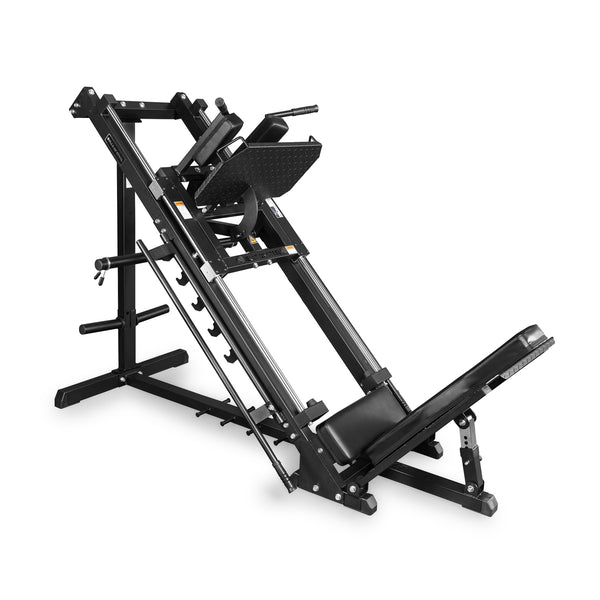
Here's where strength machines pay for their floor space. A hack squat or a leg press sends heavy weight straight through your legs and leaves your spine out of it. Neither balance nor bar path decides when your set ends, so you can push to the edge.
Barbells That Spare Your Lower Back
Your barbells aren't the problem. Where the weight hangs is.
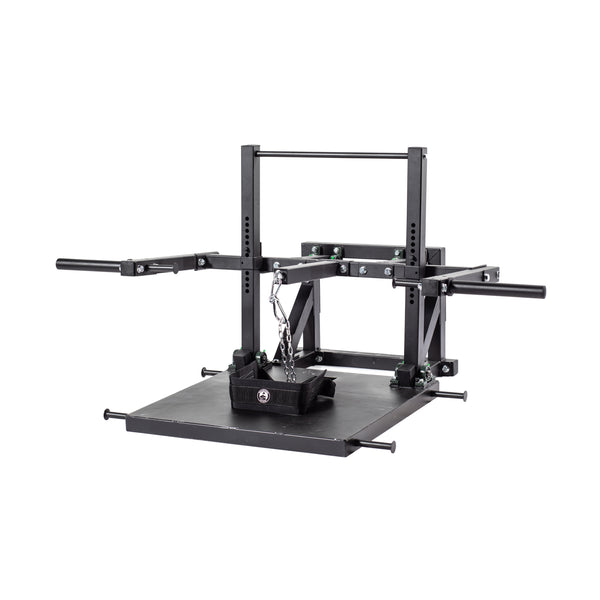
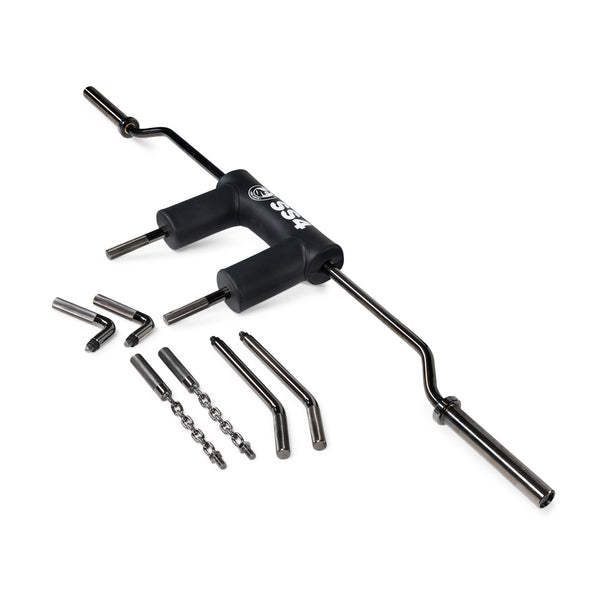
Shift a load to your sides with a trap bar and you stay tall, which takes your lower back out of the fight. A safety squat bar steadies the squat and offers handle options, so your shoulders get a say. That's why both live in the specialty bars lineup.
How to Brace Properly
Bracing has nothing to do with pulling your navel toward your spine. Run it the other way.
Fill your belly with air, then lock everything around it down hard, the way you would if you saw a punch coming. You want pressure in every direction, 360 degrees of it, not just across the front. Keep it locked through the sticking point and breathe once you're back at the top. Ribs stay down. Don't arch hard, and don't let anything round.
Back pain on leg day rarely traces to the exercise itself. It shows up on the one rep you didn't brace for, at a weight that needed it. A lifting belt gives your air something to push against, so treat it as a partner to the breath, not a replacement.
Train One Leg at a Time
Most people skip this one. Step ups. Single leg press. Split squats, Bulgarian or otherwise.
Feeding one leg at a time still buys a serious training effect, and it sorts out whichever side has been coasting. Total weight per rep drops, and your injury risk drops with it. Ten honest split squats will humble you, which is the trade you want: plenty of stimulus for your legs, a small bill for your spine. A pair of plyo boxes handles step ups with no other kit.
Earn Your Range, Then Control the Tempo
Two habits carry most of the weight here.
Start with range. Open the hips and ankles, then take the rep as low as your spine will stay neutral. Owning your depth is the safety mechanism, not avoiding depth.
Then tempo. Take the speed out and stop bouncing out of the bottom. A slow lowering phase buys time under tension at a lighter weight. Same result, less charged to your back. A bit of mobility work keeps both within reach.
A 5 to 10 Minute Leg Day Warm-Up
Hips, knees, ankles. That's the brief.
- Alternating groiners. From a high plank, bring one foot up beside your hand, pulse twice, then swap sides. Ten per side. The closer that foot gets to your hand, the more hip range you claim.
- Glute bridges. On your back, heels pulled in toward your butt. Push your hips up as far as they'll travel, squeeze hard at the top, hold a beat, lower. Ten reps. Wake the glutes before anything asks your posterior chain for work.
- Good mornings. Hands behind the head, hips travelling backwards, knees softly bent. Go until your chest points at the floor and your hamstrings complain. Flat back, no rush, ten reps. Primes them for everything after.
- Toe and calf raises. Stand tall, rise onto the balls of your feet, then flip it and lift your toes high. Pause a second at each end. Ankles and calves handled.
A Spine-Friendly Leg Day, Start to Finish
Run it in this order:
- Five to ten minutes on the hips, knees, and ankles.
- One main lift that keeps load off your spine. A belt squat, hack squat, or anything in the trap bar family. Three to five hard reps, braced the whole way.
- Unilateral work next, higher reps. Bulgarian split squats or step ups.
- Finish on a leg press. You're not balancing anything, so chase that last hard set and let your legs be the reason you stop.
Nothing about your intensity has to drop. Your back just stops being the first thing to quit.
Age isn't something you train around. It's something you train with. Take the load off your spine, lock your midsection down, split the work between your legs, and slow the reps on purpose. Put your energy into the warm-up and your range of motion, not the number on the bar. The next ten years are still yours, and they can be your best.
SHOP STRENGTH MACHINES