The worst way to buy a leg machine is to spend well over a thousand dollars and discover that you absolutely hate it.
Leg machine tends to eats floor space and budget, and rarely resells without a painful hit, so this pick matters more than almost anything else in a home gym.
The leg press hack squat, the pendulum squat, and the belt squat machine all look like they do the same job, but they feel nothing alike under load. Here are the four things that settle it: how the resistance feels, how each one treats a beat-up back and cranky shoulders, how they fit different heights, and who each machine is built for.
Meet The Leg Day Line Up
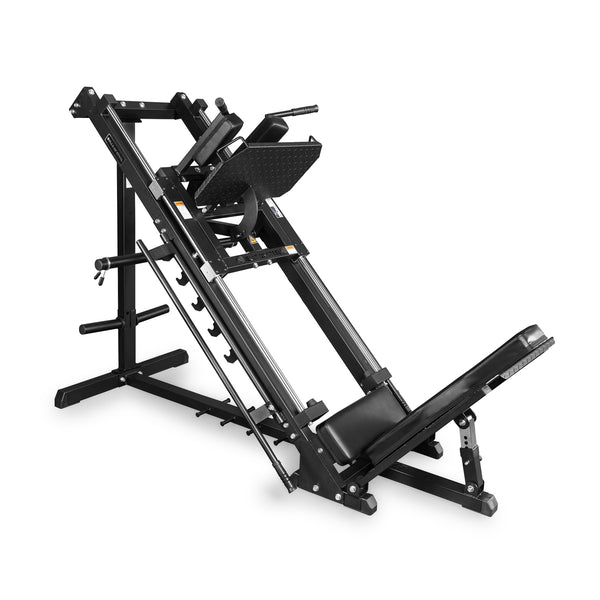
The Leg Press Hack Squat Machine is the classic, switching between the two movements in seconds. Bodybuilders love it, as does anyone missing their commercial gym leg press. You can load far more weight than you can squat, and that ego boost motivates.
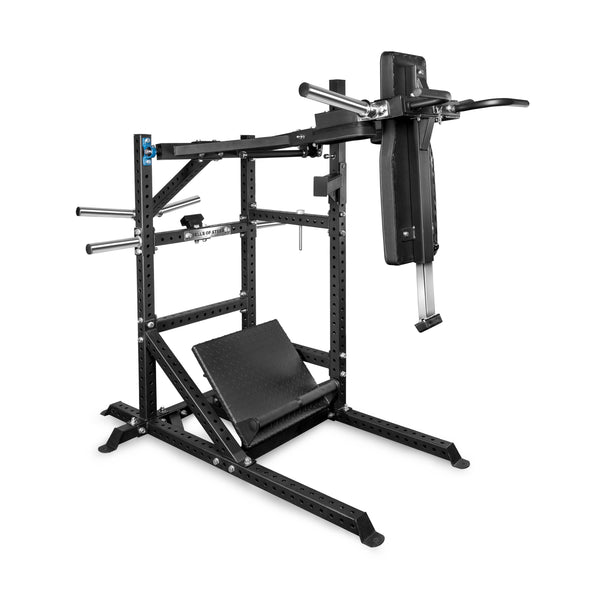
The Pandemonium Squat is the B.o.S. pendulum squat machine, packing three functions into one frame: pendulum squat, Viking press, and calf press. Its big draw is the strength curve, which you used to only find in hardcore bodybuilding gyms. Pendulums typically sit right where belt squats sat five years ago: rare, pricey, and commercial only.
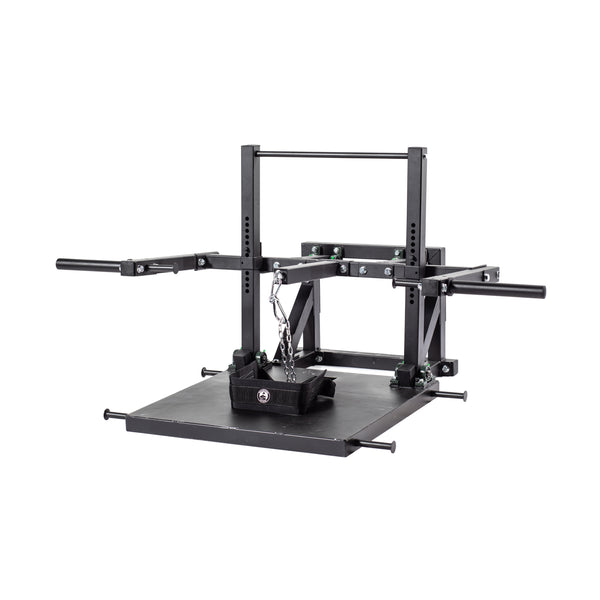
The Belt Squat Machine lived only in hardcore powerlifting gyms a decade ago. It is not a basic two-machines-in-one build, but the lever system opens up rows and plenty of other work.
Linear Track vs Arc: How the Resistance Feels
The leg press hack squat and the belt squat are both linear track machines, so resistance at the bottom matches resistance at the top. Your legs are strongest up top and weakest out of the hole, yet the load never changes.
The belt squat machine shares that curve with completely different loading. Weight pulls from your hips rather than pressing into your back, so your hip and knee extensors take the whole load with no help from your spinal erectors or core stabilizers.
The pendulum squat machine travels in an arc instead. Someone called it the squat with training wheels, which is fair: it guides you into genuinely good form, and that is notoriously hard to teach a beginner. Advanced lifters get more knee flexion than they could reach in a free squat unless they are exceptionally mobile, and that depth means better quad recruitment and leg growth.
Bending the Strength Curve
Both linear machines take bands. Loop them on to make the top half harder and the bottom easier, a proven way to blast through a plateau. The pendulum does it with a counterbalance arm: load the arm and the bottom eases off while the top bites, and shifting weight to the shoulder pads changes the feel again.
Which one is easiest on your back?
If you are in your 30s or 40s (and didn't stretch in your 20s while you felt mobile and immortal) odds are your back and shoulders have taken a beating. The Pandemonium Squat and belt squat both handle that better than a hack squat does.
The belt squat takes the top spot. Everything sits around your hips with zero loading on your back, which makes it the safest way to keep squatting.
Shoulders count here as well, since some lifters cannot reach back to grab hack squat or pendulum pads.
The pendulum takes second, because most of the drive skips your shoulders. You push your back into the pad instead.
The leg press hack squat lands third. On the leg press side a sore back feels that pressure, though your shoulders get an easier ride. Switch to the hack squat and both take on more load.
One tip if you go that route: more knee flexion means more quad activation, but drop too low and your lower back peels off the pad. Tuck your chin to keep your spine aligned, or cut the depth.
Height and Adjustability
The belt squat is the least height friendly of the three. It has 13 height settings, but that does not guarantee every lifter can squat full depth, and shorter lifters often bottom the arm out on the ground first. The fix is a pair of Stackable Pull Blocks to stand on, sold separately.
Both the pendulum and the leg press hack squat suit a wide range of heights, and the pendulum wins. It has been tested with lifters from 5 ft up to 6 ft 5, and both ends of that range love it. Credit the single tall upright and its three peg levels, which let the hook start higher up. Other pendulum squats skip that, so taller users duck and crawl into the machine.
The leg press gives you 5 racking positions plus multiple footplate angles, while the hack squat side leans on that big footplate alone. Ranked for fitting different bodies: pendulum first, leg press hack squat second, belt squat third.
So which one belongs in your gym?
If money and space are not an issue, the Pandemonium Squat wins on knee flexion, depth, comfort, that non-linear resistance profile, and versatility.
If protecting your shoulders and back comes first, or squatting is off the table some weeks, go with the Belt Squat Machine. And if you are in your 40s or 50s and squatting is not happening anymore, it is not really a decision. Buy the machine you can actually use.
The Leg Press Hack Squat Machine is for people who genuinely love the leg press. If you spent years pressing in a commercial gym and want that feeling at home, it is the answer, and it stays by far the most used of the three worldwide.