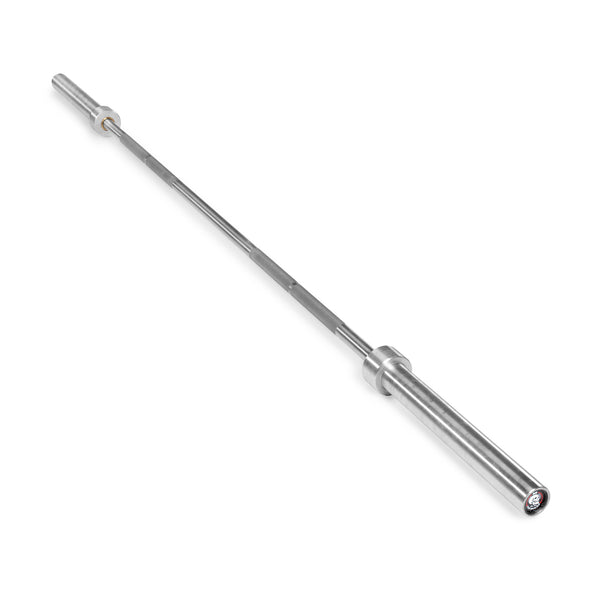
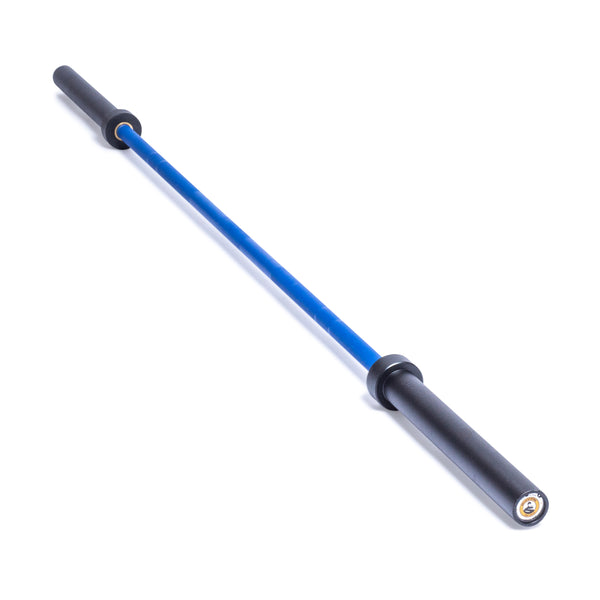
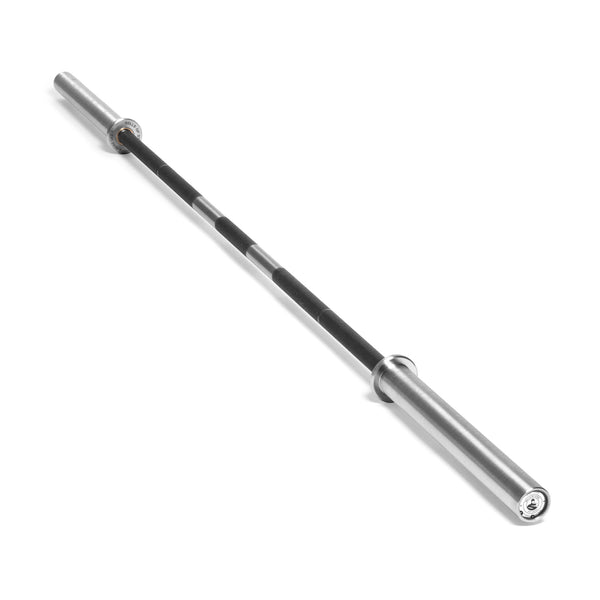
If a heavier deadlift sits at the top of your goal list, a deadlift bar can nudge the needle higher.
A proper deadlift bar gets built for one job and one job only: helping seasoned lifters move more weight on the deadlift. Every part of its design, from the grip to the flex to the way it peels off the floor, is intentionally designed with that goal in mind.
What Sets a Deadlift Bar Apart From a Power Bar
A standard power bar tries to be a jack-of-all-trades. Squats, bench presses, and deadlifts all happen on the same piece of steel. It works well across the board, which is why so many gyms (and lifters) rely on it.
A deadlift bar skips the multitasking act. It gets built for pulling, and pulling alone. The big differences include:
- A slimmer 27mm shaft instead of the thicker 29mm found on most power bars
- Extra whip, meaning the bar bends more under load
- A longer shaft, which adds even more flex
- No center knurl, giving your shins a break during aggressive setups
- Competition-style construction used across strongman and many powerlifting federations
Those changes go way beyond cosmetic tweaks. They directly shape how the lift feels and how the weight breaks off the ground.
Why That Skinny 27mm Shaft Matters
One of the first things you notice on a deadlift bar is how much smaller it feels in the hand.
At 27mm, the bar lets your fingers wrap around it with less effort compared to a chunky 29mm power bar. On paper, two millimeters sounds tiny. Under a heavy pull, those two millimeters feel massive. A better grip translates to more confidence, less hand fatigue, and a steadier hold when the weight starts getting spicy.
For anyone chasing near-limit attempts, that thinner shaft ranks as a big reason the bar feels so performance-first.
The Real Advantage: Whip and Flex
The trademark feature of a deadlift bar lives in one word: whip.
As the shaft runs thinner and the usable length stretches longer, the bar bends a bit before the plates fully leave the ground. That small bend creates a subtle but real advantage at the start of the pull.
Instead of every pound lifting at the same time, the bar eases into action first. Tension builds gradually. By the time the plates finally rise, you already have momentum on your side and a stronger pulling position underneath you.
How the Bar Gives You a Head Start Off the Floor
The breaking point of a heavy deadlift almost always happens at the start. If the bar moves, the lift lives. If it sticks, the lift dies.
A deadlift-specific bar lets you pull the slack out smoothly thanks to its flex. That softens the first inch of the pull and makes the start feel less like ripping a parking meter out of concrete.
Here is how the mechanics play out in practice:
- You brace and begin applying force.
- The bar starts to bend before the plates lift.
- Tension builds step by step instead of all at once.
- Your starting position improves as the flex kicks in.
- The plates finally rise after the bar has already bowed.
That tiny shift in timing explains why experienced lifters obsess over deadlift bar design. When the weight climbs high enough, small advantages turn into very big wins.
Ditching the Center Knurl (Your Shins Will Thank You)
A deadlift bar usually skips the center knurl, and that move pays off.
Center knurling grips your upper back nicely during squats. On a deadlift, it stops being helpful and starts being a nuisance, scraping shins and catching on clothing as the bar travels upward.
Omitting the knurling makes the bar kinder to your legs during aggressive pulls, especially for lifters who keep the bar glued close and move with speed. Fewer shin scrapes also means fewer awkward looks in the gym the next day.
Who Actually Benefits From a Deadlift Bar
A deadlift bar earns its keep for lifters who already take their pulling seriously.
It fits especially well for:
- Powerlifters training in federations that allow deadlift bars
- Strongman athletes who pull heavy often and want a competition feel
- Experienced lifters chasing records and hunting every legal edge
Newer lifters usually get more mileage from a solid power bar since it covers the big three lifts. Anyone whose training revolves around the deadlift, though, or whose meets use this style of bar, has a strong case for upgrading.
Who Can Skip It
Not every gym needs one. A deadlift bar sits firmly in specialized territory, so it rarely makes sense as a one-and-done purchase.
Feel free to pass on it if:
- You want one bar to cover squats, bench presses, and deadlifts
- General fitness takes priority over max pulls
- Your competitive federation doesn't use deadlift bars
Remember, this piece of equipment shines only on deadlifts. Not squats. Not bench. Just pulls.
So, Does a Deadlift Bar Help You Lift More?
For the right lifter, absolutely.
The thinner shaft improves grip feel. The longer, bendier design boosts whip. The bar flexes before the plates leave the ground, which sharpens starting leverage. Stack all of that together, and heavy pulls feel a little friendlier right where most max attempts stall.
None of this means the bar lifts the weight for you. It just means the design matches the mechanics of the lift. Strong, well-trained, technically sharp lifters get to turn that optimization into more kilos on the bar. In other words, you're working smarter so you can work harder.
Final Verdict on the 27mm Deadlift Bar
The Bells of Steel Deadlift Bar targets lifters who want a pulling tool, not a do-it-all barbell.
Its strengths read simple and straight:
- 27mm diameter for a friendlier grip
- Extra whip for a smoother build of tension
- Longer shaft for more flex
- No center knurl for shin-friendly pulls
- Competition-ready build suited for serious strength training
For anyone laser-focused on bigger deadlifts, with training or meets that back the choice, a deadlift bar stops being a luxury and becomes a purpose-built piece of steel that earns its spot in the gym.
Once you feel the difference between a stiff all-around bar and a dedicated pulling bar under a loaded stack, the reason for all the hype clicks into place pretty fast.