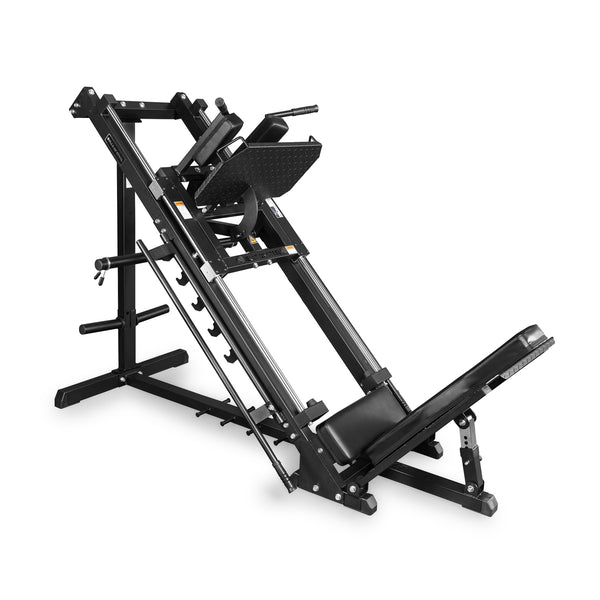
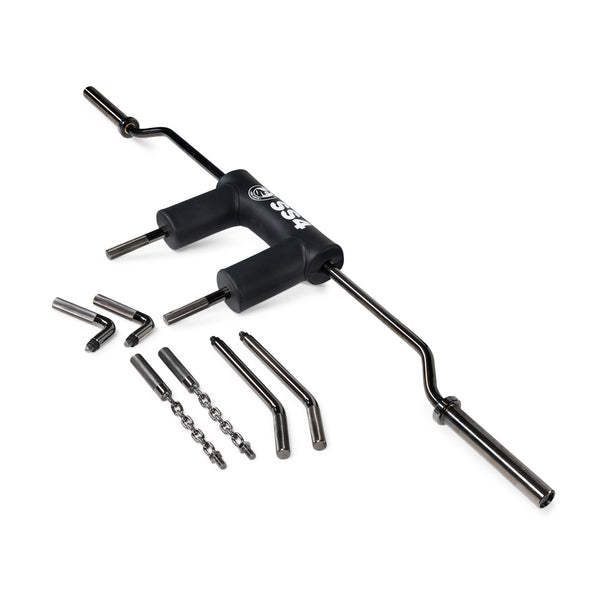
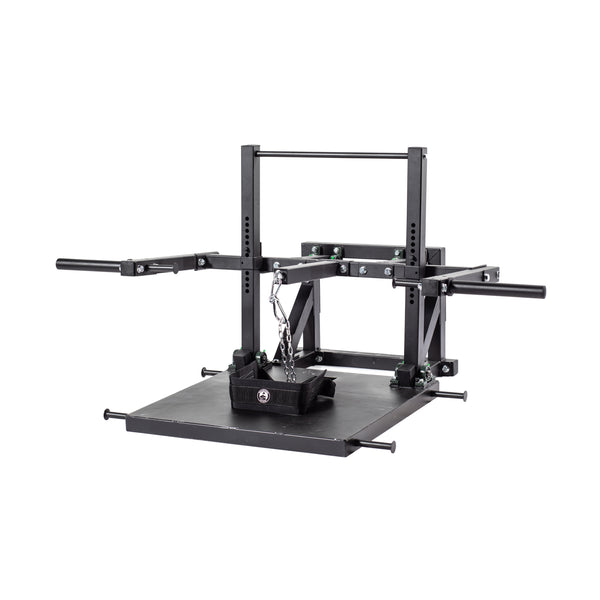
Some days your legs are ready to go and your lower back isn't. A barbell across your shoulders loads your spine either way.
A belt squat takes your spine out of it. The weight hangs off your hips, your legs do the work, and your upper body goes along for the ride. That makes it a solid pick if you're training around back pain, or if a bar on your back wrecks your shoulders and wrists.
Here's how to set one up, squat it well, and skip the mistakes that cost people reps.
Specs and What's in the Box
The Belt Squat Machine handles 700 lb, runs on commercial-grade Zerk bearings, and comes out of 11 gauge steel with a limited lifetime warranty.
It starts at 40 lb / 18.1 kg empty, so you're lifting something before you touch a plate. Factor that in when you pick your first working weight.
There are two J-cups, a belt, a chain, and two carabiners included and that covers everything you need to squat on day one.
How to Set It Up
There are 13 height settings in the Belt Squat Machine for the J-cups. Pick the one that has you standing fully upright before the first rep, not already tipped forward.
Want more than the 40 lb starting weight? Slide in some weight plates on both sides to add more resistance.
Once done, clip the belt to the carabiner and you want the belt below your waist, right on your hip crease.
How to Squat the Belt Squat Machine
Set your feet about shoulder width, toes turned slightly out, chest tall.
Pull the handle forward with a light grip to unrack. Your arms only steady and let your legs run the show.
Breathe in, brace, and lower under control until your knees and hip crease line up.
Got more range? Use it.
Then drive through your midfoot and stand tall, keeping a soft bend in your knees at the top.
Inhale on the way down, exhale at the top. When you're done, push the handles forward and let the arm settle back onto the J-cups.
Add Bands for Constant Tension
The machine has band pegs built in, so clipping on a set of resistance bands is easy. Any thickness works. The thicker band, the more resistance.
Without bands, the squat fights you hardest at the bottom and goes easy at the top. Add bands and you get resistance up top too, right where you're strongest, so your quads stay under tension the whole way through.
Not Hitting Depth? Elevate Yourself
Shorter lifters run into this issue. Weight plates hit the floor before you hit depth, so the rep ends early and your legs never finish the job.
The J-cup settings won't fix it, since they change where you start, not how much clearance the plates get.
What you can do is to elevate yourself instead. Use plates you already own, or grab a set of Stackable Pull Blocks for a flatter surface. Build a platform under the machine and you solve it permanently.
Five Mistakes to Watch For
- Belt riding too high. Sit it above your hips and you're doing a good morning, not a squat. Your weight shifts forward and your low back picks up exactly the load you bought this machine to avoid. Keep it on the hip crease.
- Knees caving in. Caving knees dump stress straight into the joint. Drive them out in line with your toes and push the floor away. Still caving? Drop the weight.
- Lazy bracing. No bar on your back makes this one easy to forget. Brace anyway, because the load still runs through your torso.
- Cutting reps short. Half a rep trains half a quad. Take the full range every time.
- Dropping fast. Most of your growth comes from the way down, so control the descent instead of letting the arm slam.
How Foot Placement Changes the Emphasis
Where you stand on the platform decides which muscles do most of the work.
Narrow stance with your toes forward? That leans on the outer quads and builds your quad sweep. Go wider with your toes turned out and you pull the inner quads, adductors, and glutes into it. That's also the safer option if your knees are sensitive.
Elevate your heels and you open up more range at the knee. Good call if your ankle mobility is limited, or if you just want more quad.
Six Other Exercises It Handles
Squats aren't the end of it. The same setup gives you:
- Split squats
- Reverse lunges
- Calf raises
- Romanian deadlifts
- Bent-over rows
- Curls
That range is what earns the floor space. You're getting closer to a full lower body station than to a single-job piece of strength equipment.
Who It's For
If you want heavy leg work without loading your spine: you're managing back issues, your shoulders or wrists hate bar position, or you want to add leg volume to a program that already squats and deadlifts the Belt Squat Machine is right for you.
It won't replace your barbell squats, and it doesn't have to. It keeps leg day going on the days a loaded bar isn't happening, in a footprint your gym can actually spare.